
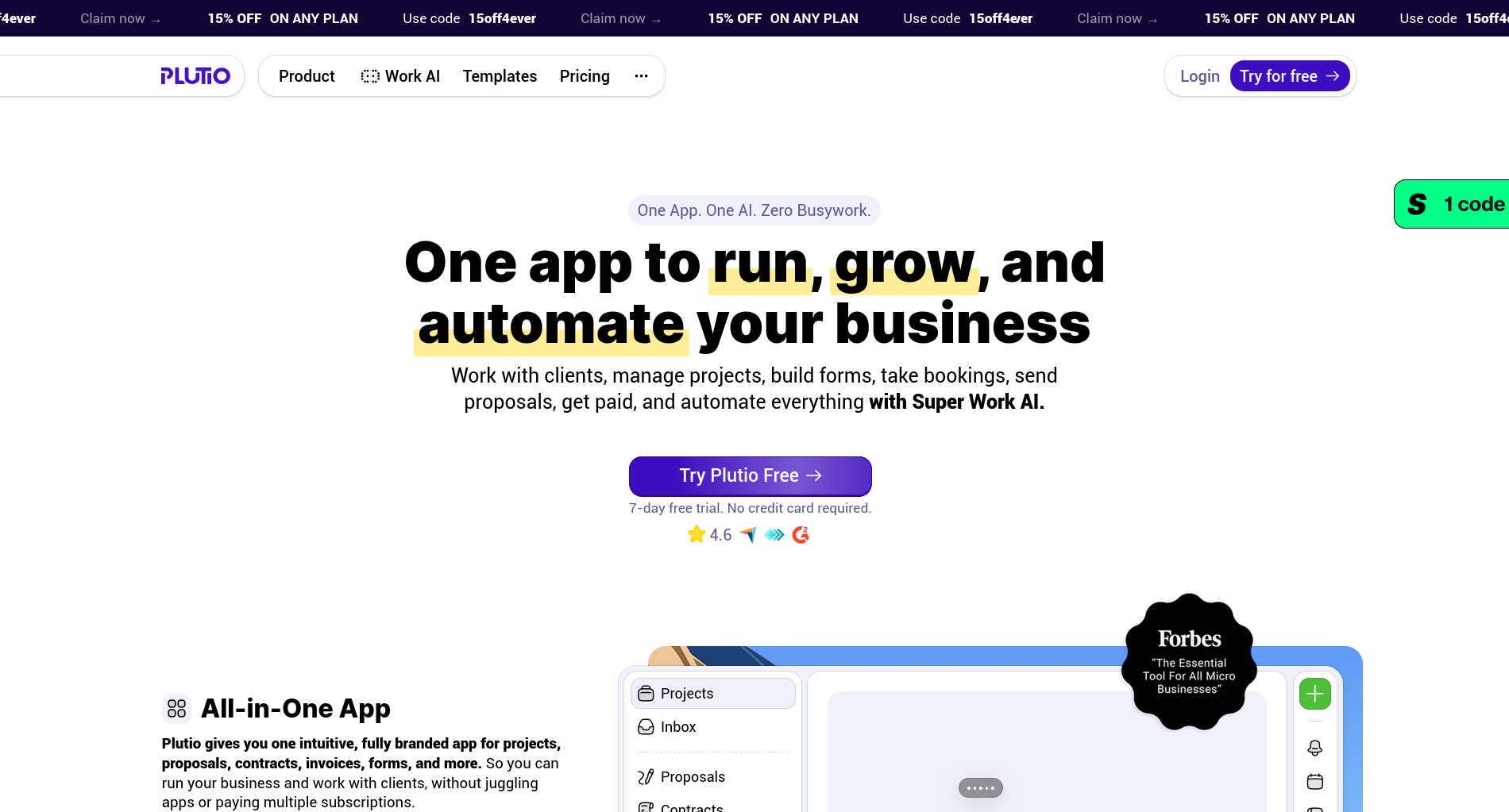
Plutio packs projects, invoices, contracts, forms, time tracking and a client portal into one flat-priced tool, and for a solo freelancer that's a great deal. The cracks tend to appear when a freelancer turns into a small agency: client caps, no team seats on the cheapest plan, and branding that costs extra.
This is a fair look at Plutio from a small agency's point of view: what it does well, where the limits bite, and what to look at if you've outgrown it or want something lighter.
What Plutio gets right
- Real all-in-one. Every plan includes projects, tasks, invoices, proposals, contracts, scheduling, forms, time tracking, file storage and a client portal.
- Open on integrations. Unlimited integrations and unlimited API access on every plan.
- Fair entry price. Core is $19/month ($190/year), Pro is $49/month ($490/year) and Max is $199/month ($1,990/year).
- An easy trial. 7 days, no card required, with white-label unlocked during the trial.
If you're a solo operator who wants contracts, invoicing and a portal in one place without thinking much about it, Plutio is a solid pick.
Where the limits bite
- Core allows 9 active clients and no extra team members. It works for a one-person freelancer. The moment you want to bring in a collaborator, you're on Pro.
- Unlimited clients cost $49/month. Pro includes 30 contributors and unlimited clients, so the jump from $19 to $49 is where most small agencies end up.
- White-label is an add-on. It costs $9/month on Core and Pro, and it's only included on Max at $199/month. Plutio's pricing page doesn't mention a custom domain.
- Usage caps. Plans include monthly AI credits and workflow actions (500 each on Core), and extra storage and credits are sold separately.
- A lot of product for a portal. If clients only need to see progress and share files, much of Plutio sits unused, and a portal nobody opens makes the rest harder to justify.
Who should stay on Plutio
Stay if you work solo or in a small team, want invoicing, contracts and time tracking in the same tool, and don't mind paying a little extra for white-label.
Alternatives worth looking at
| Tool | Best for | Starting price* |
|---|---|---|
| Aupero | Small agencies who want a simple, milestone-based client portal | Free plan |
| SuiteDash | Agencies that want CRM, billing and portal in one tool | From $19/mo, unlimited clients and staff |
| Assembly (formerly Copilot) | Polished, modern portals for service firms | Free plan, paid from around $29/mo billed annually |
| Taskip | Budget all-in-one for agencies | Around $12/mo (per vendor) |
| Agiled | All-in-one with agency features | Paid, see vendor |
| Moxie | Solo freelancers who want lightweight client management | Paid, see vendor |
*Prices change often and some sources conflict. Check each vendor's pricing page before deciding.
Aupero
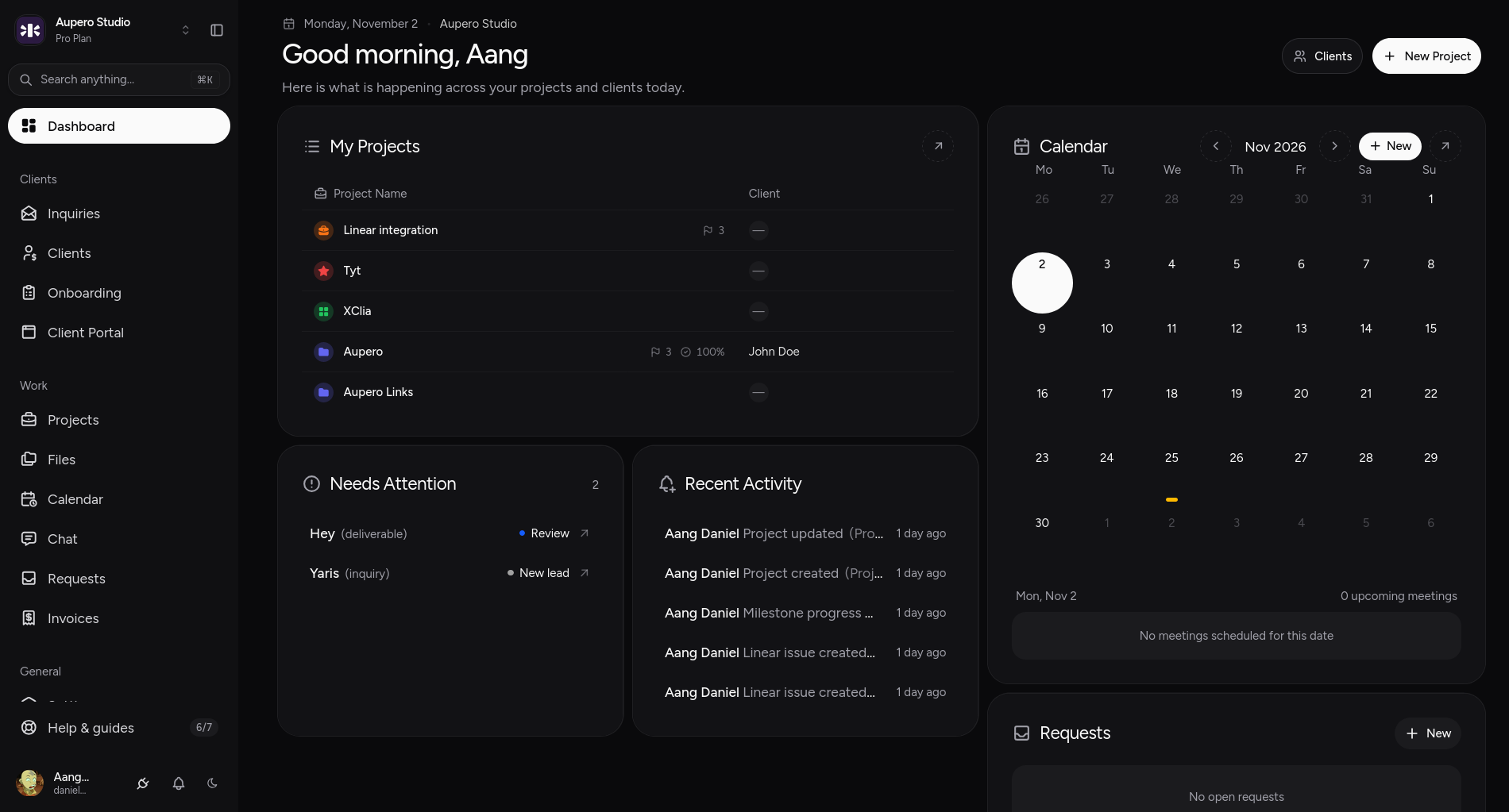
Aupero is built around one idea: your clients shouldn't need training. Each project is a set of milestones, and clients see progress against them in a branded portal, along with files, forms and conversations with you. Your internal dashboard stays private. They never see it.
What it does:
- A client portal that's separate from your agency dashboard
- Milestone-based projects, not task boards or ticket queues
- Intake forms and proposals for new enquiries
- Meeting booking with Cal.com and Google Meet
- Google Drive integration, and Linear integration on paid plans so your dev team can keep working in Linear while clients see milestone-level progress
What it doesn't do yet: it isn't a full billing and contracts suite, and it has no built-in time tracking. If invoicing and e-sign need to live in the same tool today, look at Plutio, SuiteDash or a separate invoicing tool next to Aupero.
There's a free Starter plan, and paid plans come with a 7-day trial, the same length as Plutio's.
SuiteDash

SuiteDash covers the same ground as Plutio with a different pricing shape: $19, $49 or $99 per month, with unlimited clients and staff on every plan and white-labeling from the cheapest tier. The trade-off is a longer setup and a busier interface. See the full SuiteDash alternatives breakdown.
Assembly
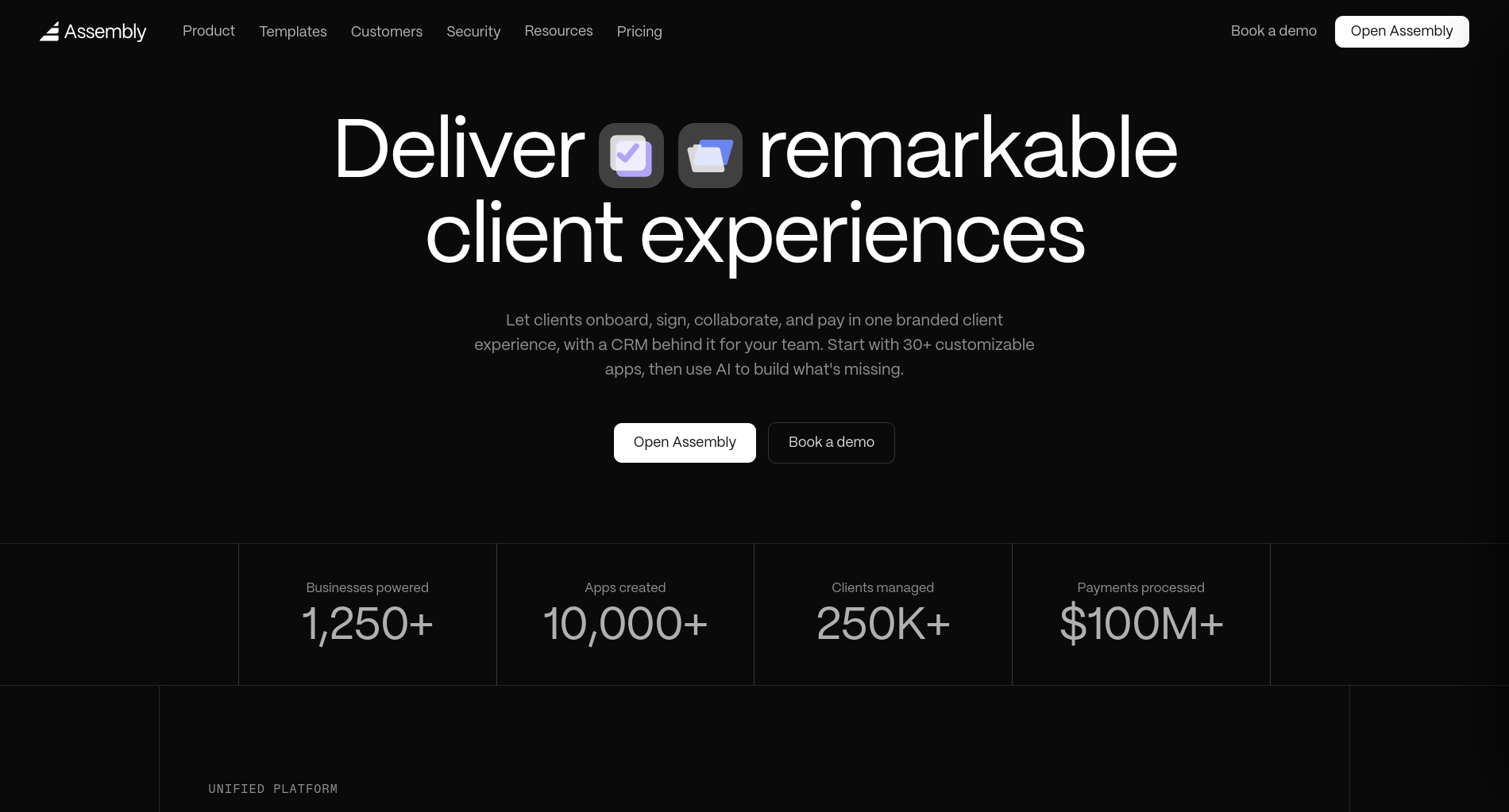
Assembly is the polished option, with a free plan and a strong client experience. Active contact caps and internal user limits rise with each tier, and custom domains start at the Professional tier. See the full Assembly alternatives breakdown.
Taskip and Agiled
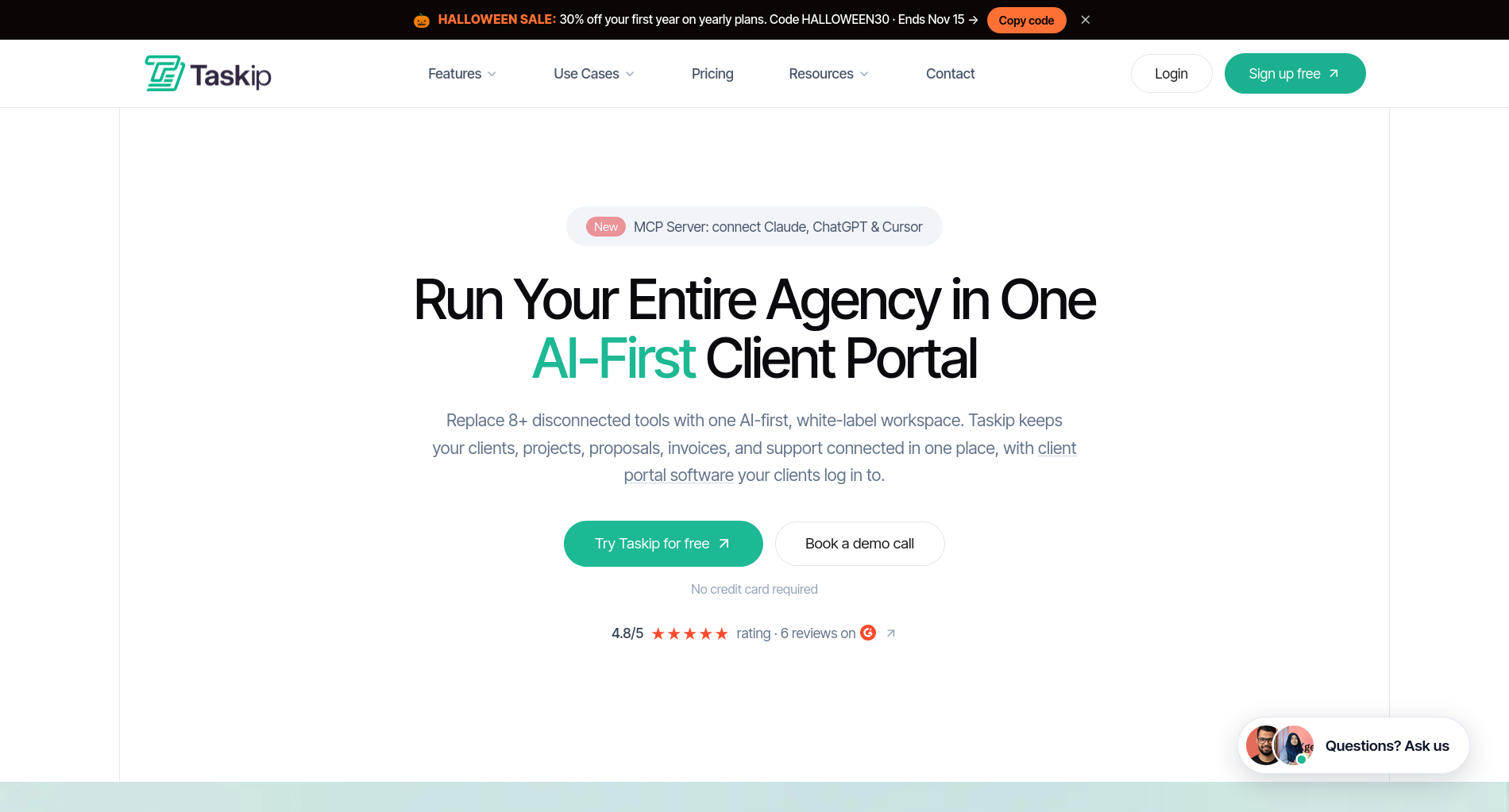
Both are cheaper all-in-ones aimed at agencies, and both publish a lot of comparison content, so read their claims about themselves with that in mind. Shortlist them if you want something close to Plutio's feature set with agency-style workflows, and run a real project through each trial.
Moxie
Moxie is a freelancer-focused all-in-one with a lighter client side than Plutio. Check which plan includes the client portal, and how many team members each tier allows, before committing.
How to choose
Ask three questions:
- Will you add teammates or pass 9 clients this year? If so, compare the real cost of Plutio's Pro plan plus white-label with the alternatives.
- Do you need billing and contracts in the same tool? If yes, stay with Plutio or look at SuiteDash. If you only need a client-facing progress view, a lighter portal is enough.
- Do you deliver projects with milestones? If so, a milestone-based portal like Aupero maps to how clients think about the work.
Whatever you choose, run one real client through it before you migrate everyone. A portal nobody opens is a more expensive way to keep sending email.
Try Aupero
If you want a lightweight portal your clients can understand in a minute, you can start on the free plan at aupero.xyz. Tell the team what's missing. Aupero is still being shaped around what agencies actually need.